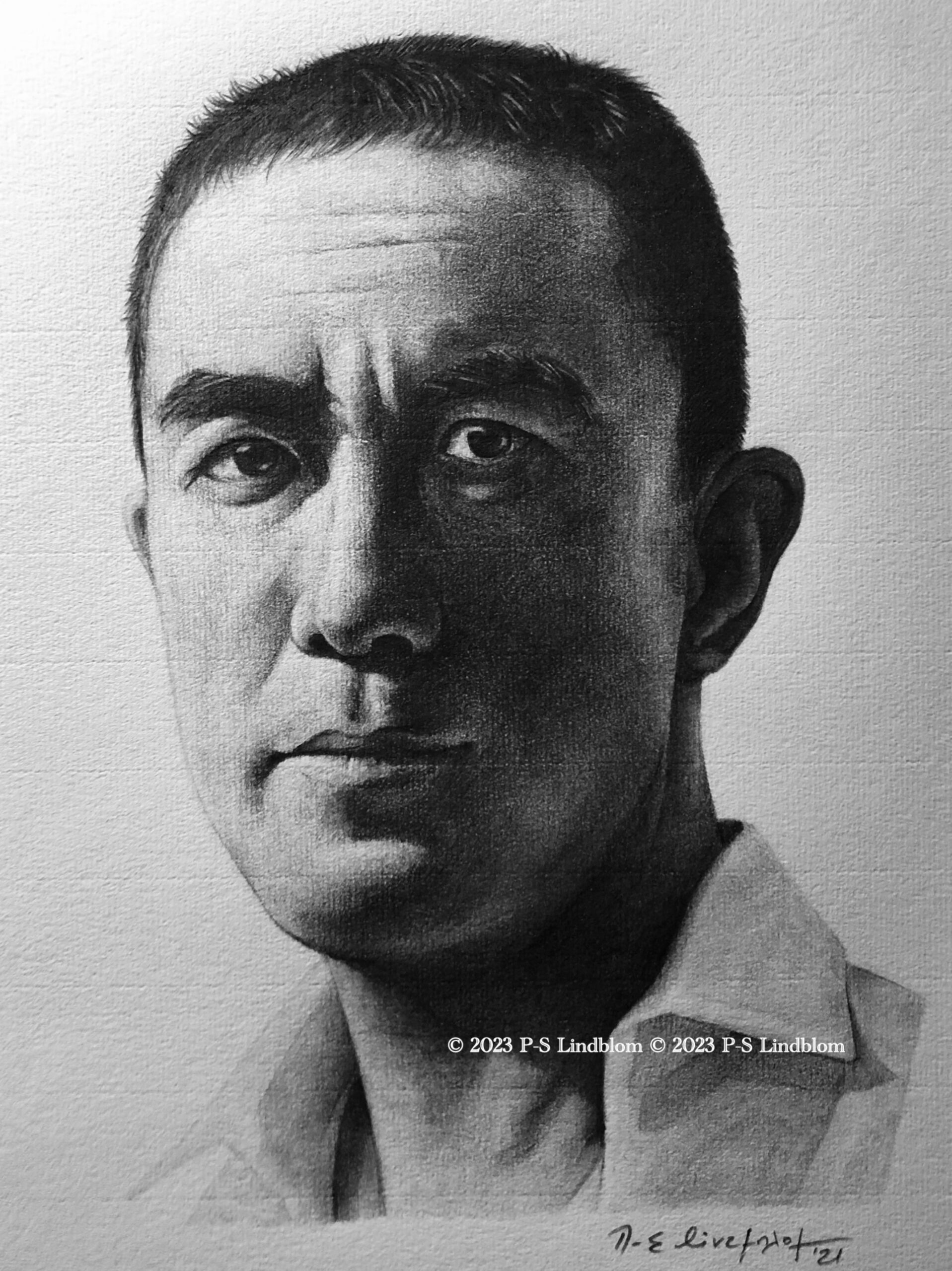
Type: Limited edition prints
Size: 48cm x 33cm
Tirage: 50 copies
Yukio Mishima (三島 由紀夫 ; January 14, 1925 – November 25, 1970), born Kimitake Hiraoka (平岡 公威) Japanese author, poet, playwright, actor, model, Shintoist, nationalist, and founder of the Tatenokai "Shield Society", an unarmed civilian militia.
Considered one of the most important Japanese authors of the 20th century.
He was long been a favorite of the international press ; In a 1966 edition of Life magazine, he was called “Japan’s Dynamo of Letters” and “the Japanese Hemingway.” Appearing on the cover of The New York Times Magazine in August 1970, he was dubbed “Japan’s Renaissance Man.”
Mishima's political activities were controversial, and he remains a controversial figure in modern Japan.
Ideologically, Mishima was a right-winger who extolled the traditional culture and spirit of Japan. He opposed what he saw as western-style materialism, along with Japan's postwar democracy, globalism, and communism, worrying that by embracing these ideas the Japanese people would lose their "national essence" (kokutai) and their distinctive cultural heritage (Shinto and Yamato-damashii) to become a "rootless" people.
Mishima formed the Tatenokai for the avowed purpose of restoring sacredness and dignity to the Emperor of Japan.
On November 25, 1970, after having that day delivered the final installment of The Sea of Fertility to his publisher, Mishima and four Shield Society followers seized control of the commanding general’s office at a military headquarters near downtown Tokyo.
He gave a 10-minute speech from a balcony to a thousand assembled servicemen in which he urged them to overthrow Japan’s post-World War II constitution, which forbids war and Japanese rearmament. The soldiers’ response was unsympathetic, and Mishima then committed seppuku in the traditional manner (what’s more familiarly known as hara-kiri in the West), disemboweling himself with his sword, followed by decapitation at the hands of a follower.